Wednesday, July 16, 2025
Q & A with Roseanna M. White, Author of The Collector of Burned Books!
Monday, November 6, 2023
Q & A with Angela Hunt | Author of What a Wave Must Be
Angela Hunt has authored more than 165 works and sold nearly six million copies of her books worldwide. Her books have won awards such as the coveted Christy Award, several Angel Awards for Excellence in Media, and the Gold and Silver Medallions from Foreword’s Book of the Year Award. Angela holds a doctorate in biblical studies and a ThD. She and her husband live in Florida.
1. What inspired this story?
Focus on the Family wanted to do novels about contemporary social issues. Jerry Jenkins contacted writers and edited the three books, and I’m thrilled to be associated with Chris Fairy and Tamera Alexander in this endeavor.
2. Describe the audience that you envisioned while writing this book. Who do you think will enjoy this book?
I wrote the book as a parent and grandparent, and I think people in those roles will discover a lot to ponder and take away from the story.
3. What messages or themes do you focus on in this story?
One of the themes is hope, because people who take their lives have utterly lost hope. We have hope in Jesus, but many times our problems loom larger than our faith.
4. Who was your favorite character to write?
The grandmother, naturally—I am a grandmother who loves her grandchildren, and my heart aches when they are unhappy. In a very real sense, I am Nana.
5. How does faith play a role in this story?
The adult characters, including the man who takes his life, are believers. Maddie, the teenager, is not. So the adults have to deal with their own grief as they try to model Christian hope and faith for their granddaughter. Not always easy to do.
6. What do you hope readers take away from Maddie’s journey?
I hope parents of teenagers will understand how large problems loom for teens. Life seems so immediate when you’re young—it can seem like it will take forever before you get a driver’s license—so they don’t always understand that momentary actions can have eternal consequences.
7. What do you hope to communicate about the issue of suicide and the impact left in its wake?
I don’t want to give away the story’s plot points, but I can say this: People who commit suicide because they think they’re doing their loved ones a favor are absolutely wrong. Suicide causes far more grief and raises more questions than any alternative.
8. What advice would you offer young writers?
I would encourage young writers to start writing small things before attempting a novel. I wrote nonfiction pieces for five years before I even thought about writing a book. It’s a process, not something that you can learn overnight.
9. Do you have any other writing projects in the pipeline?
I am currently working on the last book of a series set in ancient Rome. I recently completed a series set in the intertestamental period; then I did four books set during the time of Jesus’ ministry; and now I’m moving on to the people whom Paul led to Christ. I’ve really enjoyed writing these series in chronological order. It’s almost like living through the Bible
Tuesday, February 1, 2022
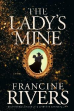
Q & A with Francine Rivers Author of The Lady’s Mine
1. You refer to The Lady’s Mine as your “COVID story.” Can you please explain?
What does a writer do when she is sheltering in place? Write. And write. And write some more! Sometimes it is so much more fun to live in a created world than the real one, and during the first and numerous succeeding shutdowns, that was what I did. Other than work in the vineyard and garden, I immersed myself in a fictional world. By the time I finished the manuscript, it was 194,000 words! It needed major cutting. But as I was still sheltering in place out here in California, the job of cutting turned out to be almost as much fun as the writing process.
2. What motivated you to return to the California frontier? What about this setting intrigues you?
I’m a native Californian, and I’ve always loved our state history, especially the gold and silver rush periods. Redeeming Love takes place from 1849 to 1851. The Lady’s Mine jumps forward to the 1870s silver rush. Men from around the world and all walks of life poured into the state, hoping to strike it rich. A few women came—some by wagon train, some by ship, some willing, and some not. It was a time of high drama, boom and bust. I think that’s what appeals to me most—the dreams that brought people, the grueling hard work that awaited them, the myriad stories of success and failure.
3. You have said that your stories often start with a question. What question prompted this story?
There were several questions. How does a person cope with being cast out of a family? Do we determine the course of our lives, or is there a plan already in place? Can one person change the character of a town? How can we offer a hand up rather than a handout to those in desperate need?
4. What themes in this story, set in the 1870s, have particular relevance today?
One of the themes is the oft-unfair treatment of workers. During the silver rush, it was common to have a mine owner rolling in wealth while holding workers in debt bondage. This is a common practice these days in human trafficking. We have laws now to protect workers, but without naming anyone, news stories abound of how one man at the top can rake in billions while paying workers minimum wage with few benefits. The nice side of fiction is to suggest other possibilities in how to conduct a business.
5. Your novels look deeply into characters’ motivations and emotions. What do you hope readers will learn from delving into the inner thoughts of the characters in The Lady’s Mine?
Don’t let the unfairness of life embitter you. Strive to do good no matter what others around you are doing. Treat others as you would like to be treated. Stand up and find practical ways to help the less fortunate. A handout is good for a day. A hand up can change a life forever. Speak truth no matter the cost. Don’t take yourself too seriously. Laugh. Enjoy life. Don’t hold too tightly to your own opinion. Listen and learn from others. And above all, live to please the Lord.
6. In talking about this book, you reference the apostle James, who said, “Pure and genuine religion in the sight of God the Father means caring for the orphans and widows in their distress and refusing to let the world corrupt you.” What is one practical way we can work toward not letting the world corrupt us?
This will sound like a simple answer, but the best place to find out what and how to do something is through reading the Bible. It’s also the best place to learn what not to do. Lately, I’ve been writing out a few verses a day from a book of the Bible. Romans. It will take weeks to do it, but it is already helping me concentrate and think about what God is saying, the instructions He is giving. This isn’t something I’ve always done, but now find invaluable. Writing longhand slows me down and helps me concentrate on each word, phrase, and sentence. When we’re focused on the Lord, He shows us practical ways to live in this fallen world without becoming part of it.
7. What character in this story did you most enjoy crafting? Why?
Kathryn Walsh! She has strong faith, seeks the Lord, and does what she believes is right. She isn’t a quiet little lady in the pew. She’s fiery, opinionated, earnest, and determined to make the town she lives in better (whether men agree or not). When she realizes she’s wrong about something, she changes her mind. When she’s right, she plows ahead no matter the cost. She looks for ways to help people rise from poverty. Though she has few resources herself, she shares what she does have. She doesn’t judge anyone (except Matthias Beck!), though she is frequently judged by others (Beck being one). And she has a sense of humor. Frankly, I enjoyed getting to know her during the COVID shelter in place orders. And, of course, Matthias Beck also had his fascinating character traits.
8. Did this story develop in any surprising ways?
Kathryn’s business management scheme came as something of a surprise. So did the next venture that leads to the real change in Calvada. But I can’t explain all that without giving the story away.
9. Working on this story during the COVID lockdown, you said that one of your goals was to address serious issues with humor and grace. You commented, “Life had become too somber to add heaviness to it. We all need to laugh, even when days are dark—maybe even more so during those times. And we all want changes for the better and a happy ending.” How did this project accomplish these goals?
Writing as much as I did helped me pass the time while sheltering in place. In some ways, my life didn’t change. As a writer, I spend most of my life at home working. I was able to get through the frustration of the ever-changing rules and opinions by creating characters, scenes, and dialogue. There are so many situations in life that challenge us to trust God. It is so true there is nothing new under the sun. The “new normal” isn’t all that different from trials we’ve faced before. We all have a choice. Grumble and growl over the way things are. Or look for the good and the humorous aspects of life. I choose the latter.
10. What do you hope your readers come to know about God through this story?
Broken relationships don’t have to mean broken lives. Let (agape) love be the motivation for what you do and how you live. God can mold the most unlikely people into wise and gifted leaders. One person can change the course of a community. The Lord can make beauty from ashes.
The Lady’s Mine by Francine Rivers
ISBN 978-1-4964-4757-9 | Hardcover $27.99 | February 8, 2022
Preorder today: Amazon (aff link)
Tuesday, June 29, 2021
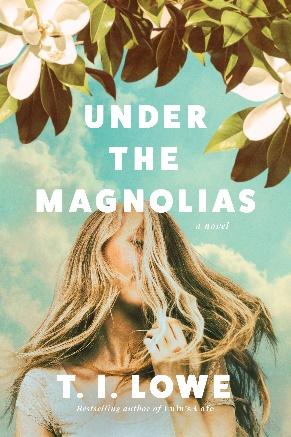
Q & A with T. I. Lowe Author of Under the Magnolias
Q & A with T. I. Lowe
Author of Under the Magnolias
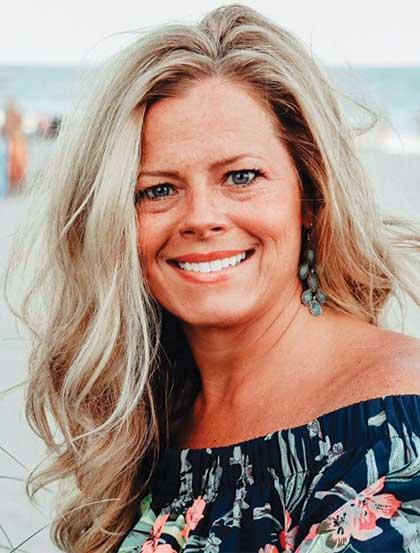
T. I. Lowe is an ordinary country girl who loves to tell extraordinary stories and is the author of nearly twenty published novels, including her debut, Lulu’s Café, a number one bestseller. She lives with her husband and family in coastal South Carolina. Find her at tilowe.com or on Facebook (T.I.Lowe), Instagram (tilowe), and Twitter (@TiLowe).
1. Under the Magnolias is different from your usual romance novels. What compelled you to deviate from your usual subject matter in this book? How was your writing process different?
I always write what I’m led to, and I really never want to limit my stories to a certain genre. With romance, there’s typically a loose formula to follow—boy meets girl, they fall in love, something gets in their way, they overcome it for their happily ever after. But with this book, I just wrote it like no one was looking. I wasn’t even sure where it would end up until I reached the ending. It challenged me as a writer and I loved it!
2. Can you walk us through the emotions you felt while writing this book?
My emotions were all over the place. I fully invest in my characters. When they hurt, I hurt. When they rejoice, so do I. One scene where Austin starts unraveling and doesn’t see how to hold her family together, I was right there with her. It was a tough writing day, for sure, and I walked away from the computer not knowing how she would either. I definitely stayed in my head for several months while writing this one.
3. You’ve said that this book is the most important book you’ve written to date. Why?
The subject matter of this book, even though it’s fiction set in the eighties, is so relevant today. Everyone hurts. Everyone struggles. And everyone hides their truths to some degree. I was led to write this book in a way that I hope readers will realize it’s not so healthy to hide, that it’s okay to seek help no matter what they are going through.
4. You say you are an observer of people. What do you mean by that? How do you use that to craft your stories?
People are so fascinating. I know I look like a weirdo but I’m all about people watching. I also want to understand things that I see, whether it’s from a news headline or something I’ve witnessed in person, so I work that out through my stories.
5. This book has been said to highlight the best of humanity. Can you explain what you mean by that?
Honestly, I fear the world we are living in today has forgotten how beautiful it is to be compassionate and to empathize with others. This book has characters from all walks of life and highlights how those characters choose to show kindness for no other reason than to be kind. Simple enough!
6. Some of the common themes in this book are the power of community and connectedness, as well as the impact that small and simple kindnesses can have on those around us. How do you hope those themes encourage the reader? Why did you include those themes specifically?
I hope the reader will reflect on their own actions and attitudes toward others. As I’ve already said, kindness is a simple act but can have such a profound effect on the one receiving it. Austin was able to stop hiding due to the strength she garnered from those who reached out to help her and her family. We can be that for someone—how powerful is that?
Simple act of kindness example: I’m always on people-watching duty, so when I go through a checkout line and the cashier is in a terrible mood and being rude, instead of complaining to the manager, I ask the cashier if they’re having a bad day. I can’t tell you how many times this was exactly what they needed. Just someone to take the time to acknowledge them and to let them unload a second. I’ve always left those situations with the cashier smiling at me. Simple kindness, ladies and gentlemen.
7. What was the research process like for this book? Did it require more research due to the subject matter?
The research was extensive, for sure. An entire summer was spent doing nothing more than research for this book. Mental illness is a subject that I made certain I got right. Even though it’s fiction. I spent days reading articles and watching testimonies from those suffering bipolar disorder as well as the loved ones who stood by them through it. And even more time researching treatments.
8. Why did you choose to set this book in the eighties? Why was it important to you to write a coming-of-age book that wasn’t set during the age of social media?
The eighties was a great decade, so why not! I truly wanted to get to a simpler time for this book. One with less noise, so to speak. I think it’ll be easier for someone to read this subject from afar and not have cell phones and all that to distract from it. It makes Austin different yet shows her coming-of-age journey is still relevant today.
9. You used to work on a tobacco farm. What made you choose this setting for the book? How did you draw from personal experience to create the setting?
Working tobacco was my first job and my hardest job. This job taught me that everyone has to do their part. It cannot be put on the shoulders of one person. It’s quite symbolic to the story. Austin tried taking care of her father and siblings all on her own, but the burden was too heavy and came close to ruining them until the community stepped up to take a part in helping.
10. What was your inspiration for this book? You’ve referenced some of the conversations you had with God about writing this book. Can you walk us through that a bit?
Spring of 2019, it seemed every time I turned on the news or pulled up Facebook, there was a headline that a community leader, mostly church leaders, had committed suicide. Man, did that put such a burden on my heart. I wanted to know their story and why they got to the point of feeling that hopeless. Before I knew it, I was deep into research. I discovered most times those victims were secretly suffering with mental illness. They were worried what others would think, so they kept it hidden. A lot of prayer went into the book, asking God to help me understand and to express that understanding to readers. Days of writing with goose bumps along my arms and a tightened chest, I knew I wasn’t telling this story alone.
11. This book is gritty in parts, but it also serves up a good dose of humor. Why did you intentionally include humor in this story? Can you give us an example?
Life is tough! It is gritty, yet I lean heavily on humor to get me though the rough patches of life. I also needed it to get through the rough patches of this book and I think readers will too. You will meet Phoenix, aka Peg. He is the next-to-oldest brother and boy, does he have a mouth on him. The scene where he gets ahold of a man who is making racists remarks cracks me up even now. It’s a lot of dry humor, my favorite type, and Peg always gave me some comic relief on the hard writing days with his sarcastic one-liners.
12. Why is it important to write stories about characters who deal with real issues? What are some of the real issues that this story addresses?
Sometimes I think reading about real issues in fiction is easier for us to digest than reading it in nonfiction or in a self-help book. It takes us out of it, so to speak. The issues addressed in this book are quite extensive, but it is mostly about ill-fitting labels that need to be done away with.
13. What was special about crafting the Foster children in this book? Austin Foster specifically?
The Foster children lived an isolated life out on the farm. It gave me the opportunity to explore hard topics through their curious, naive eyes with an honesty that I would not have been able to pull off otherwise.
14. Under the Magnolias features several noteworthy, misfit characters. Who was your favorite supporting character to write?
This is like asking me to pick a favorite child! Yikes! I will say it’s a toss-up between Foxy and Miss Wise. Both women faced gross social injustices. They were survivors who chose not to live like victims. They are great characters to look up too, if you ask me.
15. Why did you choose to represent characters who are marginalized or misunderstood in this book?
I don’t know about you but I am just so tired of the labels and the unrealistic boxes society creates and expects you to live up to. That’s hogwash. If God wanted us all to fit in the same box, he would have created us as carbon copies. He didn’t, so that means it’s a gift to be different and I think differences should be celebrated. I did a lot of celebrating this in Under the Magnolias.
16. Chances are readers are going to have a love/hate relationship with Vance Cumberland. He’s different from the male love interests we’ve seen in your other books. What do you love about Vance? What irks you about Vance?
Vance is different from most of my male leads because we meet him in the beginning as a privileged kid. Just as we go on the coming-of-age journey with Austin, we get to do the same with Vance. That boy had a lot of growing up to do. I love his determination, but he irked me when he succumbed to those socially labeled boxes in his younger years. He eventually gets it right, and I think he’s pretty swoon-worthy at times.
17. This book gives an inside look at the reality of mental illness, through a fictional story. How do you hope the themes of this book bring mental health awareness?
I want it to open our eyes, to start more conversations about mental health, and to be more empathetic to those suffering. Being more proactive in mental health awareness requires those suffering in silence to find their voice and for everyone else to take off their blinders and pay attention.
18. This book is very raw and real, as told from Austin Foster’s point of view. Did you draw from personal experience in writing her character?
Austin and I both lost our mothers, so I shared in her grief. And we both had a parent who was sick and we felt helpless when we realized we couldn’t fix it. I drew many parallels with my mother’s battle with cancer and Austin’s father’s battle with mental illness. Both illnesses need treatment and can be life-threatening when undiagnosed. I also think it’s important to point out that both patients are the main victims of their disease, but their loved ones endure suffering as well.
19. What was the hardest part about writing a book with such heavy themes? How did you make sure you protected and prioritized your own mental health during the writing process?
Walking away from it at the end of the day. I lived this story, even dreamed about it at times while writing it. I remember one significantly heavy writing day and how I told my friend about it. She encouraged me to take a break. To do something outside the house and away from the computer. Talking about the process with my friend helped me keep my own mental health in check.
20. Nobody is immune to hardship in life and the Fosters know that well. For readers going through a personal battle, what does Under the Magnolias offer them?
It will give them the courage to seek help in those times, realizing it’s not healthy to keep it all hidden. And that people genuinely do care and want to help.
21. Fiction is often cited by people as being a form of escapism. By contrast, Under the Magnolias holds up a mirror to the joys and sorrows we experience as people. Why did you take that approach with this story?
First off, I love a good book that is all about helping me escape reality. I mean, hello, that’s why I love writing romance. But Under the Magnolias has such a different purpose. I wrote this story with no expectations on how the reader would view it, but I have no doubt God will reach many through it. I think we need more fictional books that are brave enough to open our eyes.
22. We see a beautiful picture of what it means to be the church in this book. What do you hope readers take away from this?
Exactly as you put it in the question, the church is beautiful and I’m so sad that so many are missing out on this because they have misguided views of what church is supposed to be. I’m not an expert on theology, but I do love how Ecclesiastes 4:9-12 puts it: “Two are better than one; because they have a good reward for their labour. For if they fall, the one will lift up his fellow: but woe to him that is alone when he falleth, for he hath not another to help him up. Again, if two lie together, then they have heat: but how can one be warm alone? And if one prevail against him, two shall withstand him; and a threefold cord is not quickly broken.”
23. Why do you think it’s important for people to be vulnerable with their hurt, pain, and secrets?
We are all human and all flawed and all going through something. I think when you choose to be authentic instead of pretending to be what folks expect you to be, there’s a great freedom in that.
24. What is one thing you learned about yourself from writing this book?
I’m more aware now of how I keep things hidden. I hide my pain through making jokes, sometimes at the wrong time. I’m much like Austin in the sense that I’ve put up walls to hide my emotions. I don’t cry in public. A few instances come to mind where my eyes watered, but the only time I can actually sob is in the shower or in the car by myself and that doesn’t happen often. I don’t know how to overcome this, but I’m praying about it and talking about it.
25. What do you hope your readers walk away with when they’ve turned the last page of this book?
My hope is that they say, “Dang, that girl can write!” Ha! Just kidding. Kinda . . . No, seriously, I want them to get to the end of this book and find their own sense of freedom. To bravely go out and live without putting on airs. To exercise their compassion and empathy muscles more.
Under the Magnolias by T. I. Lowe
Softcover | ISBN 978-1-4964-5361-7 | $16.99
Hardcover | ISBN 978-1-4964-5360-0 | $26.99
May 2021
Thursday, May 28, 2020
Q & A with Lynn Austin | Author of If I Were You
Q & A with Lynn Austin
Author of If I Were You
Lynn Austin has sold more than one and a half million copies of her books worldwide. A former teacher who now writes and speaks full-time, she has won eight Christy Awards for her historical fiction and was one of the first inductees into the Christy Award Hall of Fame. One of her novels, Hidden Places, was made into a Hallmark Channel Original Movie. Lynn and her husband have three grown children and make their home in western Michigan. Visit her online at www.lynnaustin.org.
Have you always loved books and reading? What about your formative years informed your love for reading and books?
Books have been part of my life for as long as I can remember, beginning with bedtime stories when I was a child. My mother was the town librarian in the village where I grew up, so it’s not an exaggeration to say I was raised in a library. Over the years, I helped with everything from processing books to reading aloud for story hour, and I developed a deep appreciation for all sorts of books. In addition, my grandmother was a natural-born storyteller whose tales kept my sisters and me spellbound for hours on warm summer evenings.
How did you become a writer?
I loved to read, but after a while it seemed like so many well-written books offered very little hope. Too many themes seemed to be “Life is hard and then you die.” I agree that life is hard—but God is good! So I sat down one day 35 years ago (I was a stay-at-home mom with a new baby at the time) and decided to write the kind of book I enjoyed reading—one that makes me laugh, makes me cry, and helps me learn something about myself and my life. I knew nothing about getting published (that would come later), but I quickly discovered how much I enjoyed writing. Eventually, God brought a wonderful Christian author into my life who asked me to join her writers’ critique group, where I learned the basics of writing and publishing. As the years passed, I struggled to figure out if God was calling me to be a writer. I decided to persevere, and eleven years after I first sat down to write, my first novel was published.
What made you want to write historical fiction? What about that genre do you enjoy?
I write historical fiction because I love history, especially the little-known stories of ordinary people. For me, reading about the past and how people like me lived lives of courage in difficult times helps me live a life of faith and grace with God’s help. When we travel back in history through novels, I think it’s easier to see how God used tragic events as part of His redemption story. And that gives us faith to believe that He is still working now and that our lives can play a part in His story today.
What motivated you to write a story line about two women in WWII?
The idea for If I Were You began with a true story someone told me about a British war bride who came to America after WWII—only to learn that her husband had died in a tragic accident. Should she stay? Return to London? As I began researching the time period, I discovered how much the war changed roles and expectations for women in Britain, dissolving class differences. I’m a huge fan of the TV series Downton Abbey, so I decided to create two women—Audrey, a wealthy aristocrat, and Eve, her servant—and explore the ways the war and the “invasion” of American soldiers before D-Day changed their lives.
Please tell us a bit about the setting of your novel.
There are three settings, really. The main characters grow up at Wellingford Hall, a stately manor house in the countryside outside of London in the 1930s. Audrey lives upstairs with all of the advantages of wealth and prestige. Eve lives belowstairs as a scullery maid. When the war begins, the setting changes to Audrey’s town house in London in the 1940s, where the now-grown women endure the nightly catastrophic Nazi bombing raids known as the Blitz. But both of these settings are surrounded by a framework set in 1950s America, where one of the women has gone to live as a British war bride.
Please tell us about your main characters in If I Were You and what kind of challenges they face.
Audrey Clarkson is raised with wealth and privilege—which seems enviable except that she’s confined to a life of narrowly defined roles and is expected to marry within her class, not for love. Eve Dawson is born into the working class as a servant, with very little hope of ever bettering herself—or marrying the upper-class man she loves. But when the war begins, the women enlist in the Army together and drive ambulances in war-ravaged London. Their courage and faith are challenged in ways they’d never imagined.
Who was your favorite character to write and why?
I think Eve was my favorite. She had a hard life, yet for the most part she remained happy and optimistic, seeing life as an adventure. She makes some terrible choices out of desperation—but don’t we all? I love that she is imperfect like the rest of us.
What lessons can be learned from your main characters?
Adversity—in this case a devastating war—can sometimes help us figure out who we are and what our purpose in life might be. God has a purpose for each of us, and once we find the courage to break free from the expectations of family and society—and our own fears—we can live the life we were meant to live. Also, there are things each woman envies about the other, and the story reveals how jealousy can sometimes blind us to the many opportunities right in front of us.
How much research did you have to do on the WWII period in the United Kingdom?
A lot! My favorite way to research is to travel, and for this book, I was able to spend a few days exploring London. The Imperial War Museum allowed me to immerse myself in the setting with the re-creation of a typical house from this time period. It also had an Anderson shelter I could crawl inside for a simulated air raid. (Very claustrophobic!) I love to interview people and read first-person accounts from people who lived through these events and experiences, which I then incorporated into the story. My purpose isn’t to write a history book that teaches readers about dates and battles, but to help them experience wartime London through my characters.
What is your hope for If I Were You?
I hope that by reading this story of ordinary women who persevered through extraordinary circumstances, my readers will be encouraged to face their own challenges with courage and faith.
If I Were You by Lynn Austin
ISBN: 978-1-4964-3730-3 | Softcover: $15.99
ISBN: 978-1-4964-3729-7 | Hardcover: $25.99
June 2020
Tyndale.com
Link to Amazon: https://amzn.to/3enQkKe
This post may contain “affiliate links.” This means if you click on a link with my affiliate code and purchase an item(s), I will receive an affiliate commission. You won't be charged extra, I'll just receive a small percentage of the purchase price. See my disclosure page here.